
Around 83% of employees say they'd be more productive if they felt more appreciated.
That stat alone should make every leader stop and think. Because when people feel engaged, seen, heard, and connected, they show up differently. They're more motivated, more loyal, and yes, more productive.
That's why you need employee engagement activities. These activities aren't just nice-to-haves. They're essential tools that build genuine connection, trust, and motivation. When done right, they're the difference between a group of coworkers and a team that actually wants to work together.
Whether your team is remote, hybrid, or fully in-office, the right activities help build trust, reduce burnout, and make work feel more human.
Let's break down what that looks like and how to do it well.
What Are Employee Engagement Activities?
Employee engagement activities are things you do to help people feel more involved and valued at work. Yes, fun is part of it, but the real goal is to build connection, boost motivation, and make work feel more human.
In simple terms, these activities help employees feel attached to the company's purpose, excited about their work, and less likely to jump ship. When people care, they work harder, stick around longer, and perform better.
These activities:
- Help employees connect and build real relationships.
- Make space for recognition, so people feel seen and valued.
- Add some fun to the mix, which cuts stress and sparks fresh ideas.
- Give everyone a chance to learn, grow, and stretch beyond their usual roles.

15 Best Employee Engagement Activities
So now that we know what engagement activities are all about, let's get into the real stuff, what they look like day to day.
What feels right for a quirky startup might feel out of place in a buttoned-up office. The goal isn't to force fun, it's to build moments that feel real. Things that make people feel like they belong, like their work matters, and like they enjoy being here.
Here are some of the best employee engagement activity ideas to spark energy, build trust, and keep things human at work.
Remote Employee Engagement Activities
Twenty-five percent of remote employees admit to feeling isolated or disconnected from their teams. And it's not just a personal issue; it affects productivity and eventually pushes people to leave.
That's why you need these activities to keep them energized, supported, and in sync.
1. Remote Buddy System
Pair new employees with an enthusiastic peer buddy to provide early support and quick culture insights and reduce feelings of isolation. It's especially helpful during onboarding, but it works anytime someone shifts teams or takes on a new role.
It creates informal learning moments and gives people a human connection from day one.
2. Wellness Breaks
Offer short, optional wellness breaks, like guided meditation or quick stretches, to promote mental health and refresh your team's energy midweek.
Prioritizing health and wellness in the workplace will allow people to work their best.
3. Gamified Team Challenges
Run light-hearted competitions, step counts, trivia, quick learning goals, or even fun stuff like "best home desk setup."
Toss in a small prize or just let the bragging rights do the work.
Healthy competition keeps things light and fun while subtly reinforcing collaboration and commitment.

4. Recognition Slack Channel
Encourage frequent and genuine use of a dedicated #kudos channel, which will allow the team to celebrate contributions and effortlessly boost morale publicly.
Public praise is simple, powerful, and costs nothing.
5. Virtual Coffee Roulette
Once a week or month, randomly pair employees for a short 15-minute coffee chat. You can automate this or organize it manually. Make it opt-in to keep it comfortable.
It replicates hallway conversations and builds unexpected connections across teams.
6. Skill Swap Sessions
Host engaging skill-swap sessions, letting team members share unique talents or interests in an informal, supportive setting.
It gives people space to share what they’re good at, connect across departments, and be recognized for the full range of what they bring, not just what’s on their resume.
7. Mental Health Check-ins and Resources
Make room for mental health in a way that feels natural. This could be optional guided meditations, a go-to app for stress relief, or a casual Slack thread where teammates swap mindfulness ideas.
When mental health is acknowledged, not ignored, it builds trust and helps people feel safe showing up as they are.
8. Virtual Appreciation Events
Host thoughtful, memorable virtual appreciation events regularly to genuinely celebrate and recognize your team's achievements.
Celebration matters. Done right, these moments remind people they're seen and valued.

Fun In-Office Employee Engagement Activities
People can be in the office and still feel disconnected. In-office engagement activities are one of the simplest ways to shift that. They help people loosen up, connect, and enjoy being part of a team. And no, they don't have to be over-the-top or expensive.
Here are some ideas:
9. Office Trivia or Game Hour
Shared laughter is one of the easiest ways to reduce stress. Schedule regular, casual trivia sessions during breaks to provide enjoyable mental resets that strengthen team bonds.
10. Themed Dress-Up Days
Pick a theme like Decade Day, Sports Jersey Day, Twin Day, and let people have fun with it. No pressure to join, but make it visible and celebratory when they do. You can even combine it with a photo wall or casual contest.
It shakes up the routine and brings personality into the office. That kind of light-hearted play is surprisingly good for morale and mental wellness.
11. In-Office Mini Tournaments
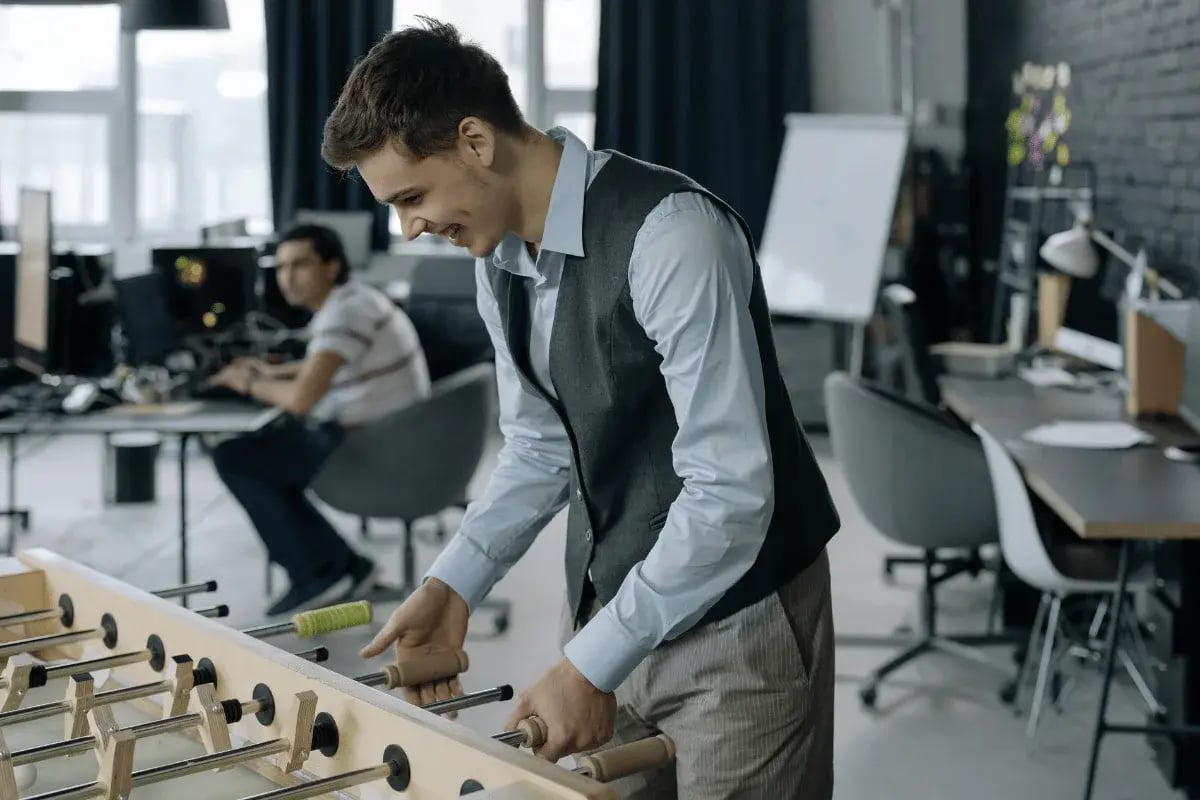
Set up casual tournaments using whatever's on hand, like ping pong, Mario Kart, Uno, puzzles, you name it. Make it a bracket and stretch it over a few days if needed.
A little friendly competition builds energy, team bonding, and lets people take mental breaks, which actually boosts productivity, not hurts it.
12. Potluck Lunches
Pick a day every month where everyone brings a dish from home or shares something from their culture or childhood. Keep it informal. No sign-ups. No speeches.
Eating together naturally builds trust. It slows people down, encourages conversation, and builds emotional connections that improve day-to-day collaboration.

13. Walk-and-Talk Meetings
Integrate walking meetings into your schedule to refresh minds, encourage casual conversations, and reduce screen fatigue.
14. Peer Recognition Wall
Establish an accessible peer-recognition space where team members can visibly celebrate each other's achievements and contributions.
A whiteboard, a corkboard, sticky notes, it doesn't need to be fancy. Just make it easy for people to say "thanks" or call out great work. Swap out the notes now and then to keep it fresh.
Public, peer-driven recognition boosts morale and reinforces a culture of appreciation, something some people crave more than perks.
15. Creative Corners or Hobby Zones
Create inviting, creative spaces for brief mental breaks, offering activities that encourage relaxation and innovation.
These activities are one part of the puzzle. If you want to make engagement stick, you need to understand how wellness ties in and how the right incentives can turn participation into lasting habits.
Download our e-book, and discover how psychology-backed rewards can transform wellness programs from a ‘nice addition’ to real culture drivers.

How to Choose the Right Activities
Not every activity qualifies as engaging. What works for one team may completely miss the mark with another. And fun on the surface doesn't always translate to a real connection.
What’s the best way to choose activities that make a real impact on morale and motivation?
1. Start with Purpose
Clearly define the purpose behind your activities, ensuring each aligns with specific goals like morale boosting, wellness support, or team bonding.
The most effective engagement activities are tied to bigger goals like increasing job satisfaction, reinforcing company culture, or improving collaboration. If there's no clear answer to "why," it's probably just filler.
Ask employees what they need more of (fun, rest, recognition, connection) and plan accordingly.
2. Make It Fit Your Culture
Choose activities that authentically reflect your company's culture and values, ensuring genuine resonance and participation. If your company emphasizes creativity, build activities that spark ideas and self-expression. If you're about giving back, think about volunteering or social impact events.
Don't force a culture that doesn't exist; use engagement to amplify the one you already have.
A fast-paced startup might enjoy spontaneous, competitive games. A mission-driven nonprofit might lean toward reflective, purpose-based activities.
3. Know Your People
Demographics, personalities, and preferences matter. What energizes one group may drain another.
Introverts probably don't want back-to-back team games. And if your team thrives on social energy, solo challenges might not land.
The only way to get it right is to ask. Use polls, surveys, or Slack. And let people help plan. If they help build it, they'll actually want to be there.
4. Support the Core Drivers of Engagement
Ensure the activities directly support core engagement drivers like purpose, growth, caring management, meaningful feedback, and strength utilization.
Your activities should tie back to at least one real driver of engagement. If it’s only free snacks and ping pong, the impact won’t last. Something like a mentoring lunch, though, supports growth, recognition, and connection all at once.
5. Keep Wellness in the Picture
Incorporate wellness intentionally into your engagement strategy, promoting mental, emotional, and physical well-being through thoughtful activities.
Look for ways to build in stress relief, creativity, and low-pressure options. This could mean mindfulness sessions, walk-and-talk meetings, or even hobby corners where people can unplug for 10 minutes.
A good corporate health and wellness engagement activity should give energy, not take it.
6. Respect Time and Workload
Even the most fun activity won't land if it shows up during crunch time or asks people to prep like it's a group project. Keep it light, and space things out; monthly or quarterly usually hits the right note.
And allow people to say no, because engagement shouldn't come with guilt.
7. Define Success and Measure It
Before launching anything, know how you'll track impact. It doesn't have to be fancy. A simple before-and-after pulse survey, quick team feedback, or tracking participation trends can tell you what's working.
You can't improve what you don't measure. Every activity should teach you something about what your people need more of.

Common Mistakes to Avoid When Planning Employee Engagement Activities
Sometimes, employee engagement activities are energizing and inclusive. Other times, they're awkward calendar-fillers that feel like mandatory fun. The difference usually comes down to how well they're planned.
So, before you dive into your next team event, here's what not to do:
- Assuming what employees want: Always seek direct employee input to avoid assumptions and ensure activities truly meet team preferences and needs.
- Treating engagement like a one-time event: A fun Friday once a quarter won't change culture. Engagement isn't a box to check; it's a habit. Create a regular rhythm; weekly team rituals, monthly activities, or even 10-minute energizers. Small moments add up.
- Leaving remote or introverted employees out: Activities that only work in the office or reward extroversion alienate large parts of the team. Offer hybrid or asynchronous options. Alternate between high-energy and reflective formats. Make sure everyone can participate comfortably.
- No clear reason behind the activity: If people don't know why they're doing something, it can feel like forced fun. That leads to disengagement, not connection. Tie each activity to a purpose, such as collaboration, wellness, or recognition. Say it out loud, and design with intention.
- Leaders don't show up: If managers skip the activity or treat it like a joke, employees will too. Engagement isn't just an HR thing; it starts at the top. Get leaders involved early. Ask them to participate, share stories, or even help lead a session. Their presence adds weight.
- No follow-up after the activity: You hosted a great event, and then silence. That kills momentum and signals it wasn't important. Follow up with a quick thank-you, a feedback form, or a short highlight reel. Show people their time mattered and that you're learning from it.

How SoHookd Helps Deliver Engaging Activities
SoHookd makes engagement simple. With wellness-focused activities designed for real participation, we help you launch activities that are easy to run and actually resonate.
Here's how we do it:
- Built-in flexibility: You can choose à la carte options, custom-built programs, or ready-to-run 12-month plans, so it fits your team, budget, and bandwidth.
- Wellness challenges that work: Think goal-driven activities that promote healthy habits like movement, mindfulness, and nutrition. They're easy to join and backed by automated reminders to keep people on track.
- Expert-led education: Employees get access to live and on-demand webinars on real topics they care about, like stress, sleep, and mental health. It's not fluff; it's actually useful.
- Incentives people want: From gift cards to wellness experiences, employees choose rewards that matter to them through a curated marketplace. No generic swag, no wasted points.
- Quick to launch, easy to use: With simple sign-up, mobile access, and minimal lift from your internal team, it's easy to get started and scale when you're ready.
- No hidden fees: Unlike many platforms, there's no per-member-per-month access fee. That means more of your wellness budget goes toward actual engagement, not overhead.
Whether you're looking to spark momentum with a short-term initiative or roll out a long-term strategy, SoHookd helps you deliver activities that people genuinely want to be part of and keep coming back to. Book a strategy call today.

Best Practices for Running Successful Activities
Choosing the right activity is step one. Making it land with your team? That's where the real skill comes in.
These best practices help you pull it off smoothly:
- Get leadership involved: When managers and leaders actively participate, it sends the message that engagement is valued, not optional.
- Mix fun with purpose: Great engagement ties into core values, team development, or wellness, while also being fun. Even a light-hearted event can reinforce belonging, creativity, or recognition.
- Make it easy to participate: Keep it low-stress. Clear instructions, easy access, and good timing matter more than you think. No one wants extra logins or confusing steps.
- Recognize participation: Acknowledge the effort, not just outcomes. Small shout-outs or thank-yous go a long way in reinforcing engagement.
- Support the whole employee lifecycle: Engagement isn’t just about the occasional team day. Build it into every stage, like onboarding, retention, growth, and even offboarding. A simple welcome activity or farewell ritual can make transitions feel more human.
ROI of Employee Engagement Initiatives
Let’s break down exactly how engagement initiatives create financial returns, from reduced turnover to higher productivity.
Key ROI Drivers
These are the areas where engagement delivers the strongest returns:
- Productivity: Engaged employees work smarter. A small boost in engagement can significantly increase output per employee and overall profitability.
- Turnover: Replacing an employee can cost anywhere from 30% of their annual salary for entry-level roles to as much as 400% for executives or specialized positions. Strong engagement reduces attrition, retaining experienced, high-value talent.
- Absenteeism: When people show up consistently, work flows better, and costs stay down.
- Customer satisfaction: Engaged employees deliver better service, driving loyalty and repeat business.
- Revenue per employee: As productivity rises and turnover drops, revenue per employee increases, giving a clear line of sight to financial return.
How to Calculate ROI
Here’s how to put numbers behind your engagement efforts.
- Measure baseline metrics: Track engagement-related KPIs like turnover, productivity, and absenteeism before initiatives.
- Implement programs: Launch recognition efforts, wellness activities, growth opportunities, etc.
- Track changes over time: Compare metrics at regular intervals post-implementation.
- Quantify financial gains: Calculate cost savings and revenue increases from improved KPIs.
- Subtract program costs: Account for both direct and indirect costs.
- Apply the formula: ROI = (Gains – Costs) / Costs × 100

Frequently Asked Questions (FAQs)
If you still have more questions about employee engagement activities, these commonly asked questions will help:
How Often Should We Organize Engagement Activities?
Aim for 2–4 times a year as a baseline. Quarterly activities strike a good balance between consistency and minimal disruption.
You can also add ad hoc sessions during high-stress periods or big transitions. The key is rhythm, enough to recharge your team without burning them out.
What's the Best Way to Measure Activity Effectiveness?
Start with simple, post-activity surveys to capture feedback, ask what worked, what didn't, and how people felt after. Track participation rates over time to see if interest is growing or fading.
Then, zoom out: are you noticing changes in team morale, collaboration, or productivity in the weeks that follow? One event won't shift everything, but patterns over time will tell you what's worth repeating.
How Can Small Companies Compete with Larger Organizations?
Lean into what big companies often can't offer: personal touches, flexibility, and genuine recognition.
You don't need deep pockets, just intentional efforts that show people they're seen, heard, and valued. Small teams have the edge when it comes to building real connections.
What Are the Most Common Engagement Activity Failures?
Here's what common engagement activity failures look like:
- Poor timing (clashing with peak work hours)
- Activities that feel forced or performative
- Lack of follow-up or feedback
- One-size-fits-all formats
Avoid these by listening to your team and refining based on their input.
Conclusion
The truth is, engagement doesn’t happen overnight, and it’s not something a pizza party can fix. Real engagement is intentional, built into daily work through moments that strengthen connection, support well-being, and remind people their work matters.
Whether your goal is reducing turnover, increasing morale, or enhancing workplace satisfaction, meaningful engagement activities are essential investments that foster lasting cultural impact. And if you want to make it easier to roll out activities that stick, SoHookd has your back - with flexibility programs, meaningful rewards, and wellness-first experiences that people want to be part of.
If you're ready to build a culture where people don't want to leave, book a call for personalized guidance.